Farm Land - Farming life game
- 4.5
- Rating
- 100.00M
- Installs
- Free
- Price
 Analysis by App-foxy
I spent time with Farm Land - Farming life game as a light adventure game built around the simple pleasure of growing a farm, collecting what it produces, and gradually making the land feel busier and more rewarding. It comes from Homa, is free to start, and is suitable for Everyone, which makes its basic idea easy to understand: enter a cheerful farm, complete small tasks, and keep improving your little piece of land.
What stood out to me was how quickly the game communicates its purpose. You do not need to study a complicated rulebook before playing. The visual setting, the farm theme, and the short actions all point in the same direction. That makes it a comfortable choice when I want something casual rather than a demanding adventure with a large story or a difficult control scheme.
There is also a useful distinction between being easy to begin and being perfect for everyone. The game is approachable, but the experience still depends on how comfortable you are with repeated tapping, visual information, interruptions, and the general rhythm of free-to-play games. I will focus on those details because they matter far more in daily use than a cheerful description alone suggests.
You May Also Like

 AccuWeather: Weather Radar
AccuWeather Review: A Quick, Clear Forecast for Everyday Decisions
For everyday plans, the best forecast is the one you can understand quickly. AccuWeather makes rain timing, radar, and local conditions easy to act on, with a few trade-offs.

 Hill Climb Racing
Why Hill Climb Racing Still Turns Crashes Into One More Run
A tiny car, a bumpy hill and one more upgrade: Hill Climb Racing keeps resurfacing because its simple chaos makes every near-miss feel personal.

 AliExpress - Shopping App
AliExpress Makes Global Shopping Feel Personal, but Shoppers Bear the Risk
AliExpress turns a global marketplace into a pocket-sized discovery engine. Its reach is useful, its shopping loop compelling, and its trade-offs easy to miss.

 Lords Mobile: Kingdom Wars
Lords Mobile Is a Kingdom-Building Routine, Not a Quick Match
A case-by-case verdict on the building, battles, device demands, and social commitments that make Lords Mobile rewarding for some players and exhausting for others.

 PDF Scanner app - TapScanner
TapScanner Makes Paperwork Easier to Capture, Check, and Share
TapScanner makes scanning with a phone feel less like a rescue operation and more like a dependable step in getting work done. Its capture tools are useful, though not flawless.

 Block Blast!
 Shows How Much a Puzzle Game Can Leave Out
A quiet grid game shows why puzzle players increasingly value instant clarity, repeatable skill and low-pressure play—and where the genre still needs to catch up.
More From Our News Desk
View All News


How the farm reads and guides you
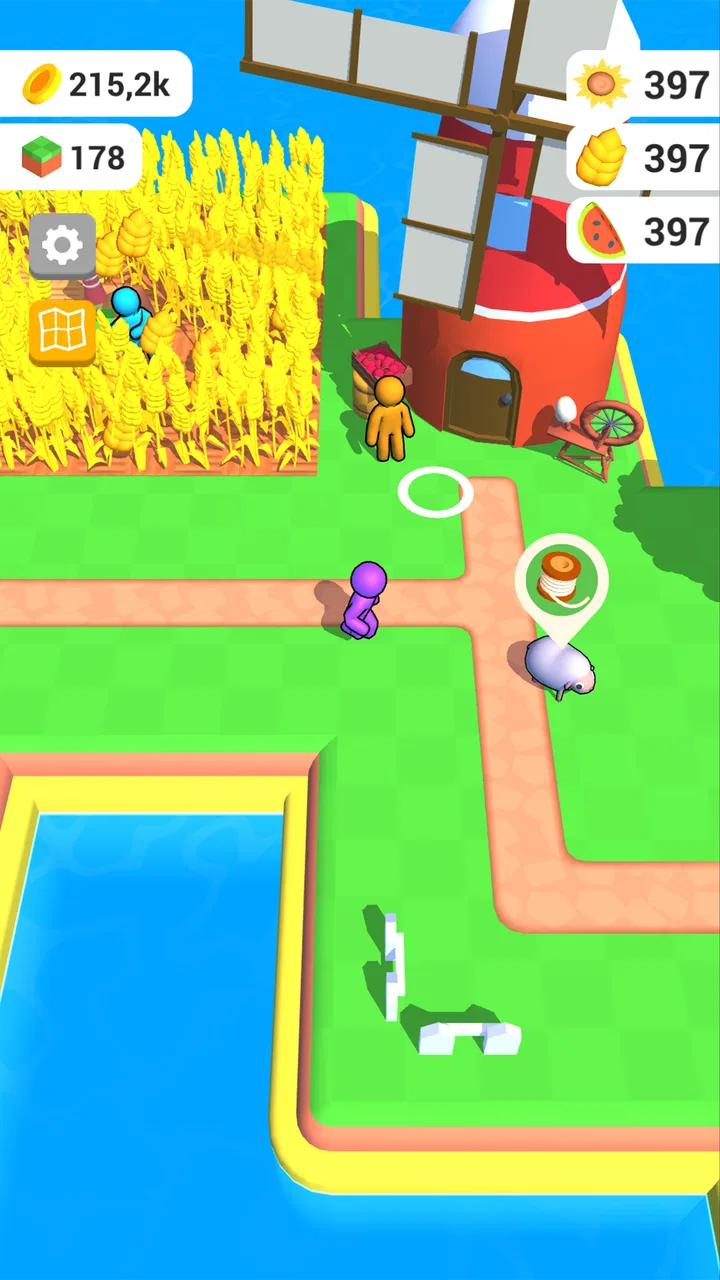
I found the farm’s visual guidance most useful when I treated the screen as a quick snapshot rather than a list of chores: first spot what looks ready, then choose one action that fits the time I have. That keeps the experience manageable even when several things catch my eye. Next, I’ll look at how this clear presentation shapes the way I navigate and play in short visits.
Clear visual priorities for new players
The strongest part of the presentation is its immediate readability. The farm itself is the center of attention, so I rarely felt lost about where I was supposed to look. Harvestable areas, animals, and unfinished work belong to a familiar visual language. Even when I was only playing for a few minutes, the screen made the next practical action feel obvious.
That clarity is especially helpful for younger players or anyone who prefers learning by doing. Instead of presenting a dense collection of menus first, the game encourages you to interact with the farm and understand its routine through repetition. I found that less intimidating than management games that begin with several layers of resources, production chains, and long explanations.
The downside is that visual simplicity can become visual sameness. When several parts of the farm are active at once, it may take a moment to distinguish what is ready, what is decorative, and what still needs attention. I would not call this confusing in normal play, but someone with reduced visual contrast sensitivity may need more time to identify the important object on a busy screen.
Navigation that favors short sessions
Navigation feels designed for a phone held in the hands, not for a long planning session. I could open the game, complete a few farm actions, and leave without having to reconstruct a complicated plan. That is a practical strength for commuting, waiting rooms, or a short break between chores.
For me, the most effective way to use it was to treat each visit as a small loop: check the land, handle the most visible task, collect the result, and stop when the activity begins to feel repetitive. This approach keeps the game relaxing. Trying to turn every visit into a complete optimization exercise makes the simple design feel more limited than it really is.
New players should also expect the game to communicate through pictures and brief prompts rather than detailed written explanations. That reduces reading pressure, but it also means that a player who prefers explicit instructions may occasionally need to experiment. I saw this as a fair trade-off for a game aiming to remain friendly and quick to understand.
Text, icons, and reading comfort
The farm theme does much of the explanatory work, while icons help identify actions and rewards. That generally supports readers who find long blocks of game text tiring. It also makes the experience less dependent on advanced language skills, since the basic goal is visible in the environment.
Still, icon-based guidance is not automatically accessible. A symbol can be easy for one player and ambiguous for another, especially when several icons share a similar shape or color. If you rely on large text, strong contrast, or spoken guidance, I would approach this as a visually led game rather than assuming it will adapt to your preferred presentation.
One practical tip is to play with the phone at a comfortable distance and avoid judging the game from a quick glance in bright sunlight. Small visual distinctions are more important when the display is washed out. Indoors, with the screen at a sensible brightness, I found the farm much easier to read than when I tried to play while walking or under harsh outdoor light.
Understanding progress without overthinking it
The progression is satisfying because each improvement is connected to the farm itself. You are not simply clearing abstract stages; you are making a place feel more developed. That visual connection can help players who need a clear reason to continue, because the reward is represented in the environment rather than hidden entirely inside menus.
At the same time, the game is not the best fit for someone who wants a deeply transparent economy. Players who enjoy calculating exact production efficiency, comparing many upgrade paths, or planning a farm several hours ahead may find the experience too lightweight. I preferred to make sensible short-term choices instead of searching for a perfect route.
A useful habit is to pause before spending any earned resources. In a relaxed game, it is easy to tap the most obvious improvement immediately. Taking a moment to decide whether you want faster progress, a fuller-looking farm, or simply the next available activity makes the session feel more intentional and reduces the sense of clicking through prompts.
Motor demands and touch interaction
The controls are built around direct touchscreen interaction, which makes the game approachable for people familiar with tapping and swiping. There is no complicated virtual joystick to master, and the farm setting gives each action a concrete place on the screen. I found that comfortable during ordinary play, particularly when I was seated and could hold the phone steadily.
That does not remove all motor considerations. Repeated taps can become tiring for anyone with hand pain, tremors, limited dexterity, or difficulty maintaining precise contact with a small target. The game’s relaxed tone may suggest that it is physically effortless, but a long session can still involve a lot of similar gestures.
My recommendation is to use short sessions rather than trying to clear every available action at once. This is not only better for comfort; it also suits the game’s design. If you need larger touch targets, switch to the biggest practical display you own, keep the device stable, and avoid playing while carrying something or moving through a crowded place.
Players who use alternative input methods should be cautious about expectations. A touch-first game may not translate neatly to every external control setup, and I would not choose it specifically for hands-free play. It works best when the player can comfortably interact with the screen and recognize the response immediately.
Motion, sound, and sensory load
The farm atmosphere is pleasant rather than aggressive, which helps when I want a calmer alternative to action-heavy adventure games. Its subject matter is gentle, and the basic activity does not depend on fast combat reactions. That makes it a better choice for players who dislike pressure, sudden danger, or constant competition.
However, calm subject matter does not guarantee a low sensory load. Bright colors, animated activity, repeated feedback, and changing visual elements can still be tiring for people sensitive to motion or busy screens. If that describes you, I would test the game in a quiet setting and stop as soon as the screen begins to feel crowded instead of pushing through a longer session.
Sound is another situational issue. A farming game can be enjoyable with audio, but it should not be treated as an ideal choice for places where you need complete silence. Playing with the device muted is practical, although some players may find that visual feedback alone feels less lively. Earphones can solve the privacy problem, but they are not always suitable when you need to remain aware of your surroundings.
Using it in everyday situations
A realistic use case is a ten-minute break after work. I can sit down, check what has changed on the farm, collect a few results, and finish without committing to a long story chapter. That makes the game useful when I want a small sense of progress but do not have the attention for a complex strategy title.
It also works well for a child who wants to explore a farm theme without entering a frightening or mature game world. The Everyone age rating supports that broad audience, but adults should still remember that free games can include optional purchases. I would set expectations before handing over the phone, particularly if the device is shared.
For travel, the game is more dependent on context than its casual appearance suggests. A stable seat and a clear view of the screen are ideal. It is less suitable while walking, standing on a crowded platform, or trying to follow a conversation, because the small farm actions still ask for visual attention and repeated interaction.
For players with limited energy or fluctuating concentration, the short-loop structure can be a genuine advantage. You can define success narrowly: finish one task, collect one reward, or simply look around the farm. The important point is not to treat every available activity as an obligation. The game becomes more inclusive when you allow yourself to stop early.
Where the free model changes the experience
The game is free to download and play, but optional in-app purchases range from $1.49 to $119.99 per item. That is a significant range, and it is the main point I would discuss with anyone who shares a device with children or anyone who prefers games with a single predictable cost.
I did not see the free entry as a problem by itself. It lets you discover whether the farming loop suits you before paying. The trade-off is psychological: once progress, convenience, or a desirable improvement is placed near a purchase option, the relaxed rhythm can start to feel less relaxed. I recommend deciding in advance that you will play without buying anything, or setting a firm spending boundary before starting.
This also affects the comparison with traditional paid farming games. A paid alternative may offer a more settled pace and fewer purchase decisions, while Farm Land is easier to try and better suited to a quick phone session. If you value immediate access and low commitment, the free model is attractive. If you want a fixed-price experience with deeper long-term planning, another farming game may suit you better.
What the scale and updates tell me
The game has reached over 100 million installs, with a 4.6 average from around 750 thousand ratings and roughly four thousand written reviews. Those figures suggest that the basic concept has connected with a very broad mobile audience, and my experience matches that accessibility: the central loop is easy to understand without demanding specialist knowledge.
Its current version is 3.24.0, and the game first appeared on March 11, 2021. For a player deciding whether it is worth trying today, the more useful takeaway is that this is an established title rather than a brand-new experiment. I would still judge it by your own tolerance for repetition, touch interaction, and optional spending instead of assuming popularity guarantees a personal fit.
The minimum operating system is Android 7.1, so it is not restricted to only the newest phones. That can help people using an older compatible device, although actual comfort will still depend on screen size, responsiveness, battery condition, and how easily you can see the farm. A device that technically runs the game may not provide the most comfortable experience for every player.
Who should choose it, and who should skip it
I would recommend it to someone who wants a friendly farming adventure with visible progress, simple touch controls, and enough activity to fill short breaks. It is particularly appealing if you like animals, harvesting, and the feeling of gradually making a small place more lively without learning a large rule system first.
I would also suggest it to families looking for an Everyone-rated game, provided purchases are managed responsibly. The visual theme is approachable, and the lack of a combat-centered identity makes it less intimidating than many adventure games. It can be a pleasant introduction to resource collection and light progression.
I would skip it if you need a fully hands-free experience, strongly dislike repeated tapping, or want comprehensive accessibility controls rather than a visually guided touch interface. I would also look elsewhere if your ideal farming game includes deep production chains, extensive decoration control, a substantial narrative, or a completely predictable one-time price.
Compared with puzzle games, it offers a stronger sense of place but usually less moment-to-moment challenge. Compared with large farming simulations, it is easier to enter but lighter on planning depth. Compared with action adventures, it is gentler and less reaction-focused, though it may feel too repetitive if you need constant novelty. Those differences are more important than the farm theme itself when deciding whether it belongs on your phone.
My inclusive verdict
My overall impression is that Farm Land works best as a flexible, low-pressure mobile activity rather than a complete farming simulation. Its readable setting, familiar goals, and short sessions make it welcoming in many everyday contexts. I especially like that I can play for a few minutes without feeling that I have abandoned a complicated campaign.
Its inclusive qualities are practical rather than specialized. The game avoids demanding combat and explains much through the farm environment, but it remains dependent on visual recognition, touchscreen precision, and tolerance for repeated actions. That means the same simplicity that helps a beginner may not be enough for someone who needs large controls, alternative input, reduced motion, or stronger nonvisual feedback.
If you approach it with realistic expectations, the free entry is worthwhile. Try it in a comfortable position, keep sessions short if repeated gestures are tiring, mute it when the environment requires quiet, and decide how you will handle purchases before progress makes them tempting. The best way to enjoy this game is to treat the farm as a relaxing place to visit, not a checklist you must finish.
For me, that balance makes it an easy recommendation to casual players who want a cheerful farming break. It is not the right answer for every ability or every gaming preference, but it succeeds at making a small farm feel inviting without demanding a large commitment. Homa has created a game that is simple to approach, broad in appeal, and most enjoyable when the player controls the pace.
FAQs for Farm Land - Farming life game
01What is the main objective of Farm Land - Farming Life Game?
Farm Land - Farming Life Game is all about creating and managing your own farm. Players begin with a small plot of land and must cultivate crops, raise animals, and expand their farm. The main goal is to optimize production, complete tasks, and grow your farm into a thriving enterprise, all while enjoying a relaxing and immersive farming experience.
02Is Farm Land - Farming Life Game free to play?
Yes, Farm Land - Farming Life Game is free to download and play. However, it does offer in-app purchases that can enhance gameplay. These purchases can include items like additional currency, boosters, or special equipment. While these can improve your experience, they are entirely optional, and the game can be enjoyed without spending real money.
03What are the system requirements for Farm Land - Farming Life Game?
Farm Land - Farming Life Game is designed to run on both Android and iOS devices. For Android, you'll need a device running Android 5.0 or higher, while iOS users will require iOS 10.0 or later. The game is optimized for both smartphones and tablets, ensuring smooth gameplay across different screen sizes.
04Can I play Farm Land - Farming Life Game offline?
Farm Land - Farming Life Game requires an internet connection to play. This is necessary to access certain features like leaderboards, events, and syncing progress across devices. While you can perform some basic actions offline, a stable internet connection ensures the best overall experience and access to all game features.
05How does Farm Land - Farming Life Game handle data privacy?
Farm Land - Farming Life Game takes data privacy seriously. The game collects minimal personal information, primarily for improving user experience. Players should review the app’s privacy policy to understand what data is collected and how it is used. The game complies with data protection regulations to ensure user information is kept secure.
Pros
- Engaging and colorful graphics.
- Simple yet addictive gameplay.
- Regular updates with new content.
- Offline play available.
- User-friendly interface.
Cons
- Can become repetitive over time.
- In-app purchases can be costly.
- Requires frequent internet connection for updates.
- Limited character customization.
- Ads can be intrusive at times.

Farm Land - Farming life game
Gallery